Discover how a simple, intentional evening can turn your boat into a cozy haven for two — slow down, reconnect, and make every sunset count with Evening Onboard Relaxation.
Evening Onboard Relaxation: Creating a Cozy Ambience for Two
There’s something quietly magical about the sound of water against the hull while you sit shoulder to shoulder with the person you love. Evening Onboard Relaxation isn’t about elaborate setups or forcing romance; it’s about creating a small, intentional space that invites both of you to drop into the moment. On a boat, that means thinking light, smell, touch, and simplicity.
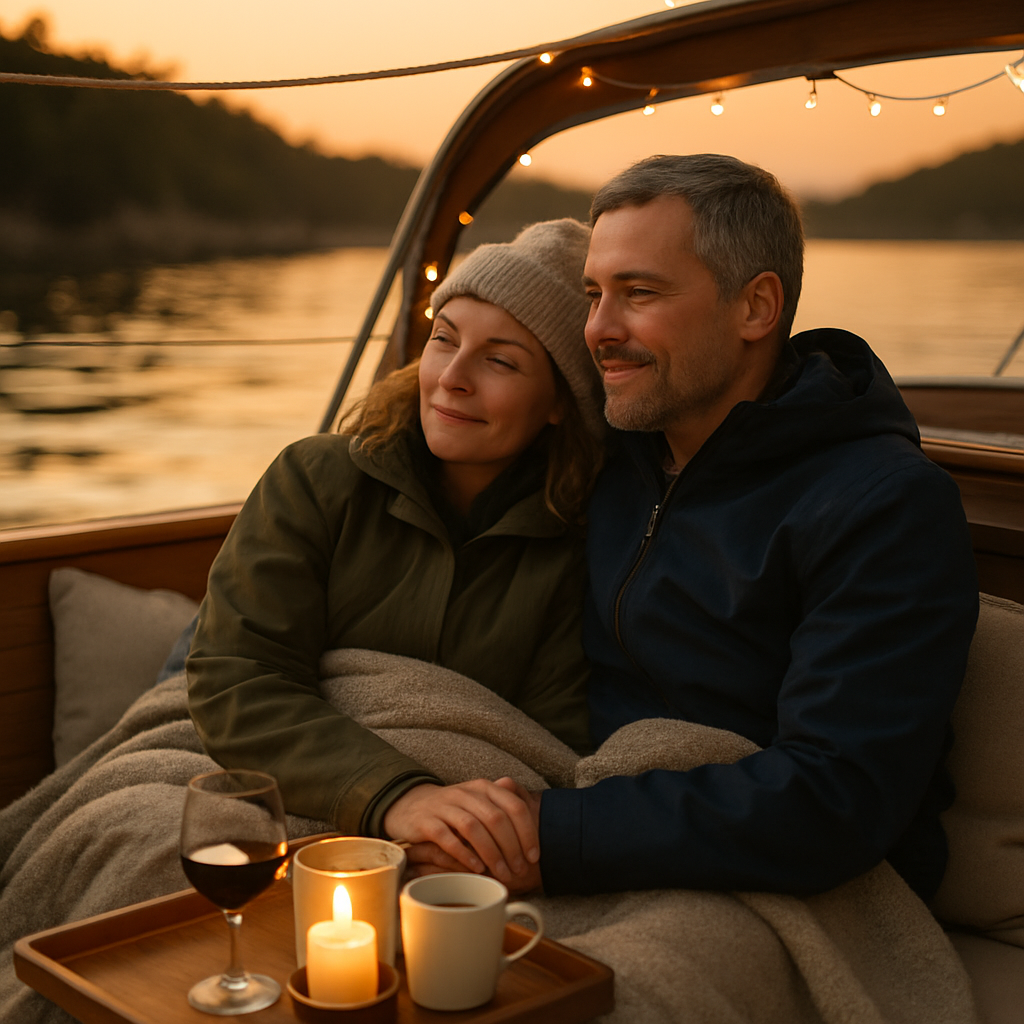
Start with the physical: clear the cockpit or cabin of clutter, stow unnecessary lines, and fold away wet gear. A tidy space signals calm. Next, add texture — a couple of dry, nonslip cushions, a soft blanket, maybe a fleece or lightweight throw for cooler nights. Small comforts make lingering easy. Don’t overdo it; a couple of well-placed items beat packing the entire salon with fluff.
Ambience is as much intention as it is objects. Ask yourself and your partner: how do you want this evening to feel? Quiet and introspective? Playful and chatty? Slow and culinary? Name it. Naming the vibe helps you choose lighting, sound, and activities that match. That focus turns Evening Onboard Relaxation from a vague wish into something you can actually enjoy.
If you enjoy mornings as much as evenings, consider how the gentle rhythm of dawn mirrors your relaxing nights; for inspiration on quieter starts that complement your evening rituals, check out Gentle Morning Sails, which explores slow, intentional morning cruising and simple routines that pair beautifully with your evening onboard habits. Reading about morning routines can spark new evening rituals and give you ideas for a full day of relaxed sailing together.
For a broader perspective on how to design downtime at sea, the collection at Relaxing Sailing Experiences offers practical and poetic suggestions that feed into Evening Onboard Relaxation. From anchorages that encourage quiet to meal ideas and low-effort rituals, exploring these pages helps you build a consistent approach to evenings that feel restorative rather than stressful, giving both partners a shared playbook for unwinding.
If you want to elevate comfort further, bring elements from spa culture aboard and explore ideas from Spa Inspired Seafaring — simple touches like warmed towels, a small aromatherapy sachet, or a mindful breathing exercise can make a big difference. These spa-inspired approaches integrate seamlessly into Evening Onboard Relaxation, transforming an ordinary sunset into a ritual of self-care and shared calm.
Sunset Calm: How to Set the Mood for a Quiet Couple’s Night at Sea
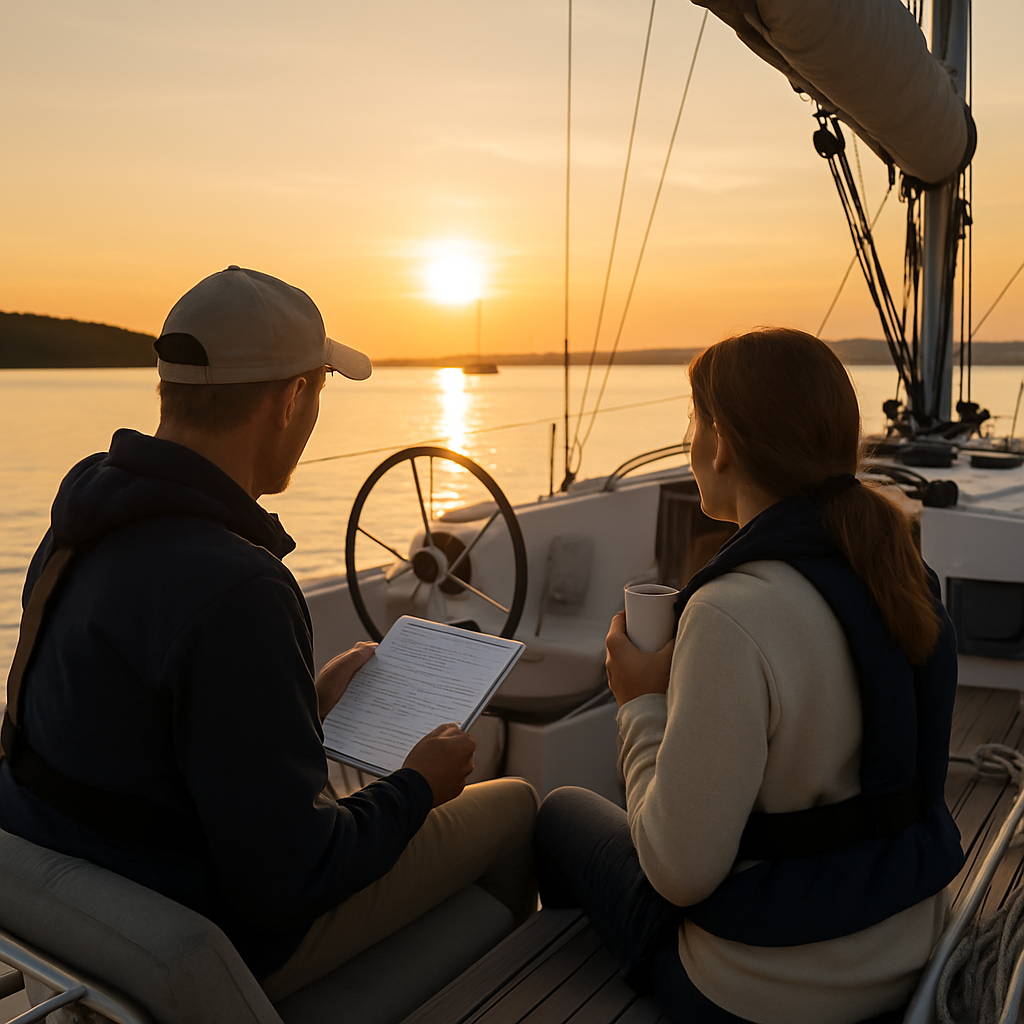
Sunset is the single best cue nature gives us to shift gears. Use it. About an hour before dusk, adopt a slow, simple routine: secure the boat, adjust any sails or gear, and begin to dim the bustle of daytime. Movement should be gentle — not frantic. A slow deck walk together, checking the anchor and letting the cooling air brush your faces, is a lovely transition activity.
Pick your anchorage with care. A sheltered cove, a quiet bay, or a small harbor slip with a view of the shore will feel more intimate than a crowded anchorage. If privacy is a concern, angle the cockpit toward the shoreline or use a small canvas or bimini extension for a little shield from curious neighbors. Even a subtle adjustment of direction changes how enclosed and relaxed the space feels.
Consider engaging the senses: light a marine-safe candle tucked into a wind-protected holder (or use a flameless candle), bring out a small dish of olives or citrus slices for scent, and lower the volume on crew tasks. The fewer competing stimuli, the easier it is to achieve Evening Onboard Relaxation. Let the sunset be your centerpiece: watch it, comment on the colors, and let the silence between sentences feel comfortable instead of awkward.
Savoring the Silence: Easy Evening Rituals Aboard with Sail With 2
Rituals anchor evenings and transform ordinary moments into memories. They don’t have to be elaborate. In fact, simple is better: small, repeatable actions that mark the end of the day and the beginning of the night. Over time, these rituals become part of your sailing identity.
Ritual ideas that enhance Evening Onboard Relaxation
- Shared drink moment: brew a pot of herbal tea, mix a light cocktail, or pour a glass of wine and sit together to toast the day.
- Gratitude quickfire: take turns naming one small thing you appreciated today — it shifts focus from stress to warmth.
- Read-aloud: pick a short poem, a paragraph from a favorite book, or a sail-related anecdote and read it to each other.
- Shadow navigation: one partner reads the stars or checks a simple nav fix while the other records the memory — playful and useful.
- Five-minute tidy: a quick sweep of the cockpit and galley before settling in reduces later dishes and clears mental clutter.
Keep rituals lightweight so they feel like treats, not chores. A consistent sequence — tidy, check, comfort, connect — becomes reassuring. That predictability is a cornerstone of Evening Onboard Relaxation: when both of you know what comes next, you relax into it.
Lighting, Sound, and Comfort: Essentials for Relaxed Evenings at Sea
The right light, sound, and seating can completely change how an evening feels. Think of these elements as the stagecraft for your relaxed night.
Lighting
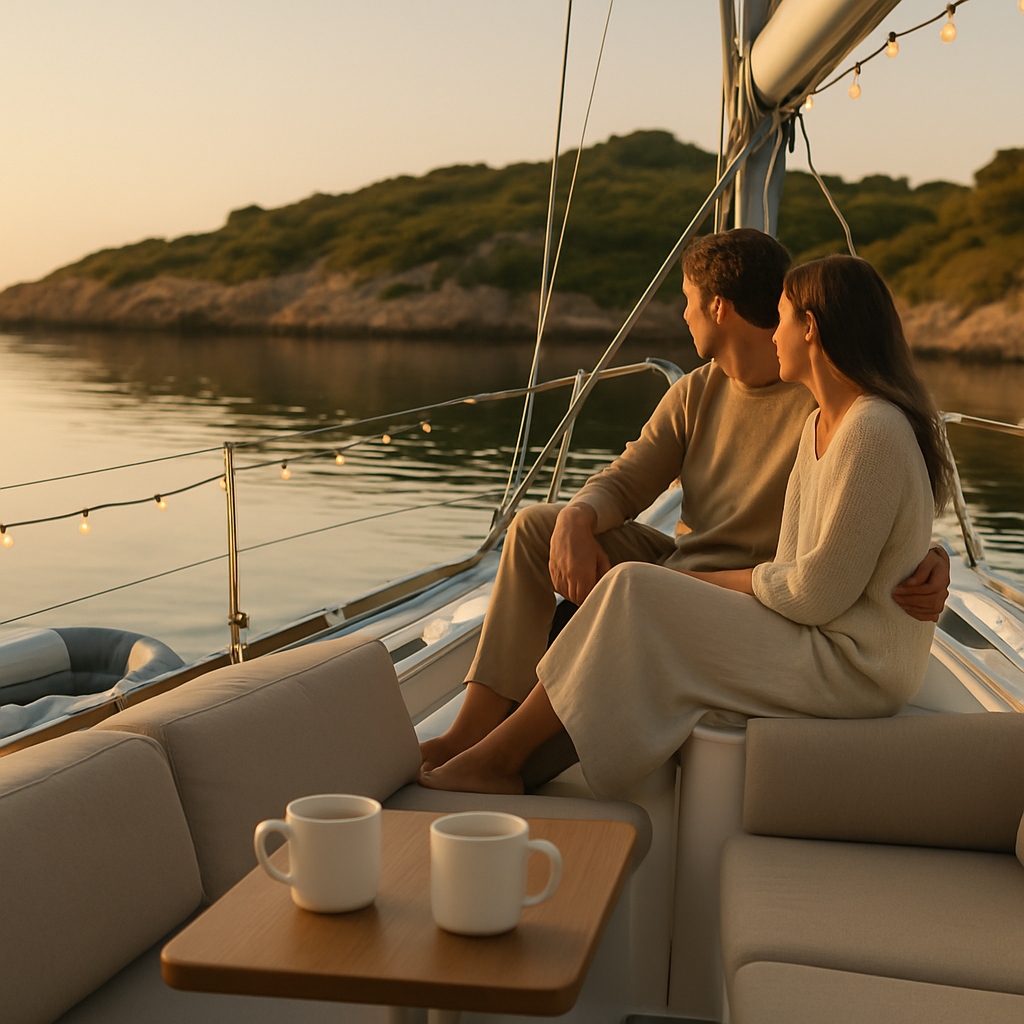
Good evening lighting is layered and warm. Combine a low overhead or dome light for safety with softer, localized lights for intimacy. Rechargeable LED lanterns and string lights with warm-white bulbs create a cozy glow without draining batteries. Place lights so they illuminate faces and hands, not the horizon — the night sky should remain visible and star-filled.
Tip: keep one red or dim-headlamp handy. Red light preserves night vision and is perfect for reading charts or shifting positions without killing the mood.
Sound
Sound can ease or disrupt Evening Onboard Relaxation. If you and your partner enjoy music, curate a playlist of soft tracks — acoustic, light jazz, or ambient instrumentals — and keep volume low. A small Bluetooth speaker with mellow mids is ideal; strong bass will rumble through the hull and distract from the night.
Sometimes, no music is the best soundtrack. Let the water, distant boat hum, and wind be the ambient score. If you need to balance different preferences, consider one partner using earbuds after the other falls asleep or splitting the evening into music and silence segments.
Comfort
Physical comfort is non-negotiable for true relaxation. Invest in good cockpit cushions, non-slip covers, and a couple of lumbar pads. Keep warm layers accessible: windbreakers, wool socks, and a lightweight down or fleece blanket can make a chilly evening feel cuddly.
Seating arrangement matters. Arrange cushions so both of you have back support and a small shared surface for drinks and plates. A cockpit table or lap tray keeps things tidy and prevents spills, which are an instant mood-killer at sea. Think ergonomics: comfort leads to longer conversations and deeper connection.
Toasts and Tales: Sharing Stories Under the Stars on Your Boat
Storytelling is the secret sauce of romantic evenings at sea. Under the stars, tales land differently: old memories feel vivid, and future plans gain a romantic edge. Use the quiet to swap stories that build intimacy.
Start light. Ask about the funniest or most surprising moment of the day. Then lean into deeper prompts: “What made you feel proud today?” or “Where do you see us sailing next?” Little secrets and playful banter both belong here. If you’re worried about awkward silences, create a jar of story prompts to draw from — childhood memories, travel mishaps, favorite meals, or dreams for the next season.
Raise a toast to seal each story. A toast doesn’t need a fancy drink: it can be a warm mug clinked against wood, or even a lip-smacking puck of lemonade. The act of pausing, smiling, and naming something aloud — gratitude, silliness, a plan — helps the evening feel ceremonious without feeling staged. That’s the essence of Evening Onboard Relaxation: small rituals that make time feel treasured.
Practical Tips for Stress-Free Evenings: Comfort, Safety, and Routine
Relaxation depends on eliminating low-level stressors. A few practical habits keep tension at bay so you can enjoy Evening Onboard Relaxation without fretting about forgotten tasks or safety.
Pre-evening checklist
- Secure loose items, stow sails, and tidy decks.
- Quick systems check: battery levels, bilge, navigation lights.
- Confirm anchor scope and set anchor alarm if available.
- Prep a simple meal or snacks to minimize time in the galley.
- Keep lifejackets and a flashlight within reach.
- Put phones on Do Not Disturb or place them out of sight to avoid interruptions.
Doing these quick steps before the sun dips will pay dividends. They’ll let you be present — the whole point of Evening Onboard Relaxation. Another good habit: plan low-cleanup meals. Sheet-pan dinners, charcuterie plates, or grilled fish with prepped sides mean you spend less time washing and more time savoring.
Safety without sacrifice
Safety and relaxation go hand in hand. Make sure both of you know where the safety gear is located and keep a plan for night-moving tasks. Agree on simple signals in case one person needs quiet or wants help — a soft tap on the arm, a particular light flash, or a phrase. Those tiny agreements prevent misunderstandings and keep the evening calm.
If you’re anchored with other boats nearby, keep a low anchor watch or set an alarm. If you’re in unfamiliar waters, a short navigational check after sunset reassures both partners that everything’s secure. The trick is to make safety part of the ritual, not an intrusive chore.
Evening Essentials Checklist
- Warm throws, cushions, and non-slip covers
- Rechargeable warm LED lights, string lights, and a red-headlamp
- Small Bluetooth speaker and a pre-made playlist
- Simple meal components or prepped food, easy-clean plates and utensils
- Flashlight, lifejackets within easy reach, anchor alarm
- Bug protection: citronella, mesh screens, or portable nets
- Binoculars or star charts for night-sky viewing
- Small trash and wipe station for minimal cleanup
Bringing It All Together: A Sample Evening Timeline
Here’s a sample timeline you can adapt to fit your pace. The goal is to keep tasks short, meaningful, and predictable so the relaxation flows naturally.
- 60–45 minutes before sunset: Tidy the cockpit, stow hazards, and prep blankets. Make a small snack plate.
- 30 minutes before sunset: Set warm lights, cue a low-volume playlist, and put phones away.
- Sunset: Share a toast, watch the sky, take a short deck walk if you’d like.
- After sunset: Settle in for a ritual — read aloud, swap stories, or do a gratitude round.
- Later evening: Dim the lights, enjoy quiet or soft music, run a quick safety check before bed.
Use this structure loosely. Some nights you’ll want to linger on the sunset; others you’ll hop into a movie in the cabin. The point is to have a framework that supports Evening Onboard Relaxation without locking you into a script.
FAQ — Common Questions People Search About Evening Onboard Relaxation
Q: How can I create a cozy ambience onboard for two without spending a lot of time or money?
A: Start small: tidy clutter, lay down two warm throws, and position a couple of soft cushions. Use low-cost warm LED string lights or a rechargeable lantern and pick one small scent element like a citrus bowl or lavender sachet. Prepare an easy snack plate so you’re not stuck in the galley, and agree on one simple ritual (a five-minute gratitude round or a short reading). Those small, repeatable steps give you big emotional returns for minimal cost and effort.
Q: What lighting setup is best for Evening Onboard Relaxation?
A: Layered, warm lighting works best: a dim overhead for safety and gentle, warm-toned bezel lights or string lights for intimacy. Rechargeable LED lanterns are great because they’re portable and low-draw. Keep a red-headlamp or dim headlamp for chart work or midnight trips to the head — it preserves night vision. Avoid cool white or blue lights; they feel harsh and reduce the cozy factor.
Q: How do we manage battery usage when we want lights and music for a romantic evening?
A: Plan to use low-draw devices: warm LED lights, a small efficient Bluetooth speaker, and rechargeable lamps. Turn off nonessential systems and keep the engine off. If you’re away from shore power, monitor battery voltage and consider a solar trickle charger or a small portable power bank to keep essentials running. Save high-draw items (heaters, ovens) for shore power or short periods. Pre-charge devices during the day whenever possible.
Q: Are there safe ways to enjoy drinks at night without increasing risks aboard?
A: Yes. Keep drinks light and pace yourselves; switch to non-alcoholic options if you plan to move around, anchor watch, or navigate later. Keep lifejackets accessible and don’t let alcohol impair basic safety tasks. If one of you might need to take the helm or adjust lines after the meal, agree that the sober partner is on call. That little agreement keeps the evening relaxed and safe.
Q: What are quick, low-cleanup dinner ideas that still feel special?
A: Charcuterie or cold plates (cheese, cured meats, olives, crackers), grilled fish with prepped vegetables, sheet-pan dinners, or a simple pasta salad are all winners. Pre-cook or pre-chop ingredients during the day so that evening prep is mostly assembly. Use one small tray or pan to minimize dishes and keep a basin of hot soapy water for immediate rinsing to avoid a big cleanup after.
Q: How can we keep insects away during warm evenings without harsh chemicals?
A: Use citronella candles in wind-protected containers, deploy mesh screens or a portable net around the cockpit or sleeping area, and keep food covered. A small battery-powered fan near seating will discourage mosquitoes. Avoid heavy aerosol sprays near food and cookware; instead use long-lasting, low-toxicity options like permethrin-treated bed nets for sleeping areas if mosquitoes are persistent.
Q: What if we want privacy but are anchored in a busy bay?
A: A few tricks help: angle the cockpit toward shore, use a canvas or bimini extension to create a visual screen, and position lights so they illuminate your cockpit only. Soft background music can mask noise from nearby boats. If you expect company nearby, plan to move to a quieter cove for just one night — sometimes that small effort gives you big privacy gains and a more peaceful evening.
Q: How can we prepare to sleep comfortably after an evening of relaxation?
A: Do a short tidy of the cockpit and galley, secure loose items, and run a final systems check (bilge, batteries, anchor). Lower lights and switch to red or very dim lamps before bed to preserve night vision and ease the transition to sleep. Keep extra blankets and a small fan or heater handy for temperature comfort. If one of you is sensitive to motion or noise, earplugs and a gentle white-noise option (like a low-volume speaker with ocean sounds) can help you both sleep better.
Parting Thought: Make Evening Onboard Relaxation Your Own
Every couple has a different rhythm. Some of you will thrive on soft music and long storytelling; others will prefer silence and stargazing. The important part is the intention: choosing to make evenings together special, predictable, and comfortable. Start small, adopt a few rituals, and tweak as you go. Over time, these evenings become the glue that binds your sailing memories — a quiet archive of sunsets, stories, and simple toasts.
So tonight, try this: turn the lights low, make two warm drinks, put your phones away, and watch the sky. You might be surprised how quickly the water, the stars, and each other can do the rest. Evening Onboard Relaxation isn’t a destination — it’s the quiet way you choose to arrive together.