Introduction: Calm Coastal Cruising — Your Invitation to Slow Sailing
Imagine waking to gentle lapping at the hull, a warm mug in your hands, and the smell of salt carried on a soft breeze. That’s the heart of Calm Coastal Cruising: slow, intentional days on the water that let you soak in scenery, conversation, and the tiny victories that come with seamanship. If you and your partner are craving a break from rush and checklist living, this style of cruising hands you what many adventures promise but few deliver — presence.
In this guest post for Sail With 2, you’ll get practical routes, gear lists, planning tips and the kind of real-world advice that comes from doing it together. Whether you’re easing into your first weekend getaway or refining a seasonal routine, these ideas will help you plan calm, safe and deeply enjoyable coastal trips with your partner.
As you map out your days, think about beginning with a few leisurely Gentle Morning Sails to ease into the rhythm and set a mellow tone for the day; there’s something quietly magical about morning light and a soft breeze. Later, give yourselves permission to linger and savor the moment with planned Quiet Anchorage Time, where a late-afternoon swim or a slow dinghy paddle becomes the highlight. For more inspiration and practical examples you can adapt, check out our broader collection of Relaxing Sailing Experiences, full of couple-focused routines and short-trip ideas that turn calm cruising into memorable retreats.
Calm Coastal Cruising: A Couple’s Guide to Relaxing Days at Sea
Calm Coastal Cruising is different from passage-making. It’s not about racing for miles. It’s about short hops, good anchorages, predictable conditions, and time to breathe. To do it right you’ll want to simplify: fewer sail changes, modest goals each day, and more margin for spontaneity. That way, when the wind shifts or you spot a hidden cove, you can linger rather than panic.
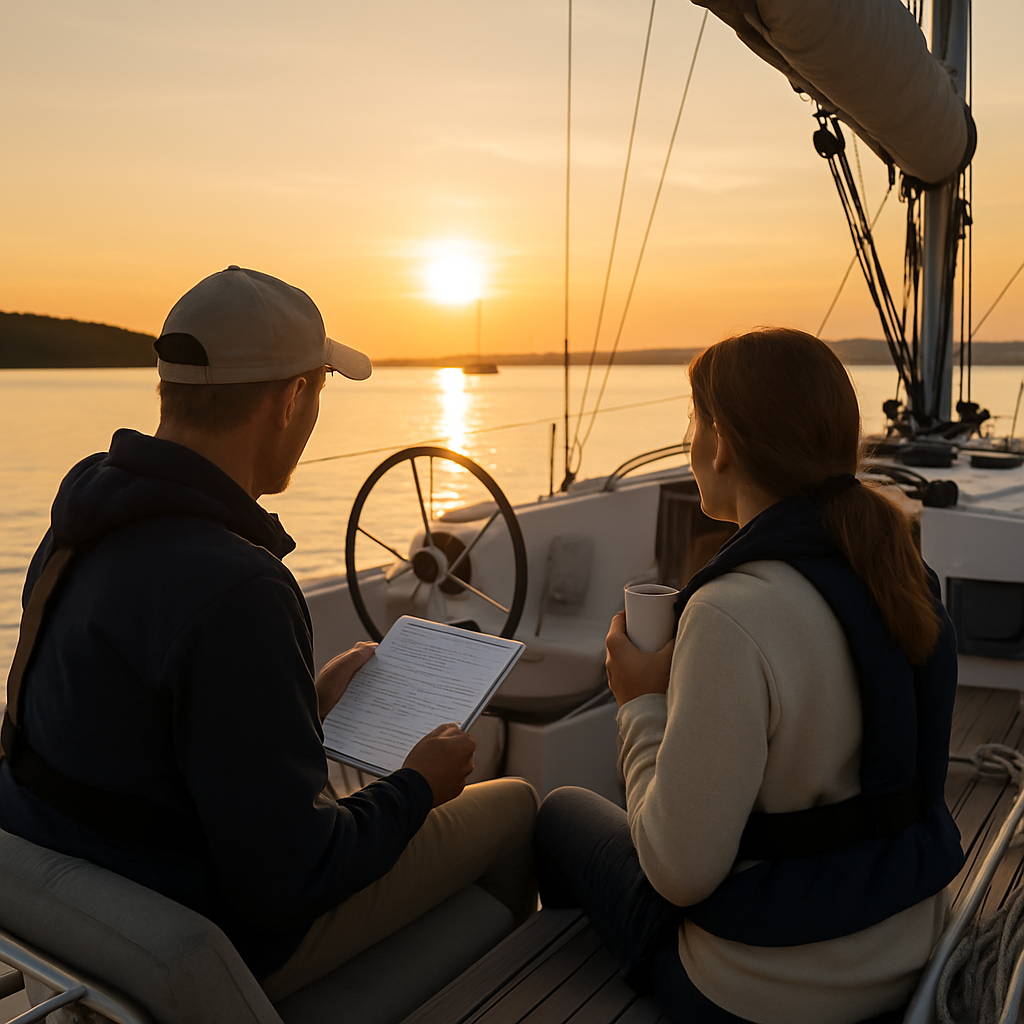
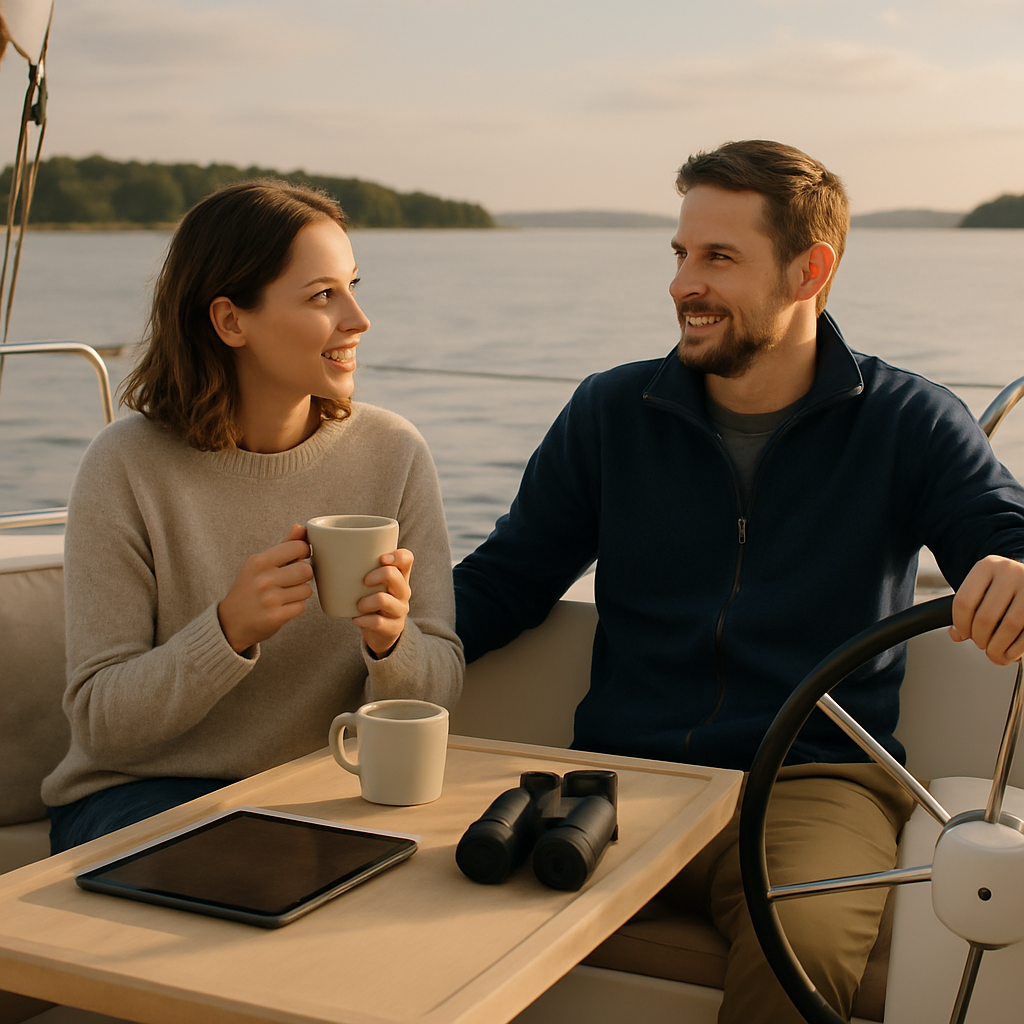
Before you leave the dock, have a short chat. It doesn’t need to be formal — five minutes. What’s one thing each of you wants today? Who’s on helm for the leg and who’s the navigator? Small agreements keep little annoyances from becoming big ones. And remember: calm cruising is perfect for practicing new skills together. Take turns trimming sails, learning anchor approaches, or doing short navigation lessons over coffee.
One more tip: slow doesn’t mean dull. Pack a couple of simple rituals — a shared playlist, a sunset photo each evening, or a two-minute log entry where you both jot one highlight and one lesson. These rituals build memories, and they make the cruising life feel intentional, even on the quietest days.
Top Calm Coastal Cruising Routes for Weekend Getaways
The right route makes all the difference. For couples, ideal routes combine short passages, interesting shore options, and sheltered water. Below are curated suggestions across regions — think short hops, cozy anchorages, and charming towns perfect for a weekend or a long weekend away.
North America
Chesapeake Bay, USA
This sprawling estuary offers quiet creeks, colonial towns and easy navigation. Plan short legs to hidden anchorages like Mill Creek or St. Michaels. Pro tip: head out in late spring or early fall for fewer bugs and kinder temperatures.
San Juan Islands, Washington State, USA
Protected channels, orca and seal sightings, and tiny harbors make the San Juans dreamy. You can easily spend a weekend island-hopping between Friday Harbor, Roche Harbor and quieter coves. Bring binoculars and a light jacket — the evenings can be crisp.
Newport to Block Island, Rhode Island, USA
Classic New England cruising with manageable passages and lovely anchorages. It’s also an easy place for couples to find delightful seafood dinners ashore after a calm day of sailing.
Europe
Saronic Gulf, Greece
Close to Athens and blessed with sheltered water, this is a top pick for relaxed coastal cruising. Islands like Aegina and Poros offer short hops, great tavernas and calm anchorages — a short ferry hop but with much more privacy.
Dalmatian Coast, Croatia
Croatia’s coastline is dotted with islands, coves and historic towns. For couples, pick the northern stretches or sail in shoulder season (May–June or September–October) when winds tame and crowds thin.
Balearics (Mallorca–Menorca), Spain
When you avoid the busiest summer weeks, these islands reward you with quiet bays, crystal water for snorkeling and charming villages perfect for evening strolls and tapas.
Caribbean & Southern Hemisphere
Leeward Islands, Caribbean
When trades are steady and predictable, short hops between protected bays make an easy, idyllic cruising ground. Antigua, Nevis and St. Kitts have lovely anchorages and friendly marinas.
Queensland’s Sheltered Passages, Australia
For southern Great Barrier Reef cruising, choose inshore routes and calm seasons. You’ll get reef views, safe anchorages and quiet nights under the stars.
No matter where you go, choose routes that fit your boat’s draft and your comfort with tides and coastal traffic. Start small. A successful weekend builds confidence for longer cruises down the line.
Gear Essentials for Serene Coastal Cruising with Your Partner
You don’t need a garage full of gadgets to enjoy calm coastal cruising, but a focused kit of reliable gear will make you both feel secure and comfortable. Pack for comfort, redundancy and pleasure. Below is a practical checklist geared toward couples.
- Navigation & Communication: Chartplotter or tablet with up-to-date charts, a handheld VHF with spare battery, smartphone with a marine app, power bank, plus paper charts and a plotting kit as backup.
- Safety & Emergency: Two well-fitted life jackets, tethered harnesses for rougher nights, a throwable lifebuoy, a stocked first-aid kit, distress flares (where legal), and a clear man-overboard plan you practice occasionally.
- Anchoring & Docking: Anchor sized for your boat and typical seabed, clean rode and chain, spare shackles, three fenders and extra dock lines. Practice approaches in calm conditions so docking feels easy rather than stressful.
- Comfort & Shelter: Bimini or sprayhood for sun protection, quality cockpit cushions, warm layers (nights cool down fast), dry bags for electronics, and good bedding if you plan to sleep aboard.
- Galley & Provisions: Simple staples, easy-to-cook recipes, a portable grill or stove, insulated water bottles, and a small coffee kit. Bring a bit more fresh water than you think you’ll need — it always feels better.
- Tools & Maintenance: Basic tool kit, spare impeller, extra fuel and oil, duct tape, hose clamps, fuses, and a multi-tool. Assign one “fixer” and one “helper” so problems are tackled calmly.
- Leisure Extras: Snorkel gear, inflatable paddleboard, binoculars, a waterproof camera or GoPro, and a deck game or two. These are the extras that turn good days into unforgettable ones.
Safety, Comfort, and Connection: Navigating Calm Waters Together
Calm conditions can sometimes trick you into letting standards slip. Don’t. A laid-back day still benefits from good seamanship. And when you get the safety basics right, you free up mental space to enjoy being together.
Keep Practical Safety Habits
Do a pre-departure checklist each day: engine checks, fuel and water levels, battery voltage, navigation lights and VHF functioning. Check weather twice daily and whenever you make a significant route change. Rotate short watches even on calm passages so neither of you zones out — vigilance is a habit, not a mood.
Comfort for Two
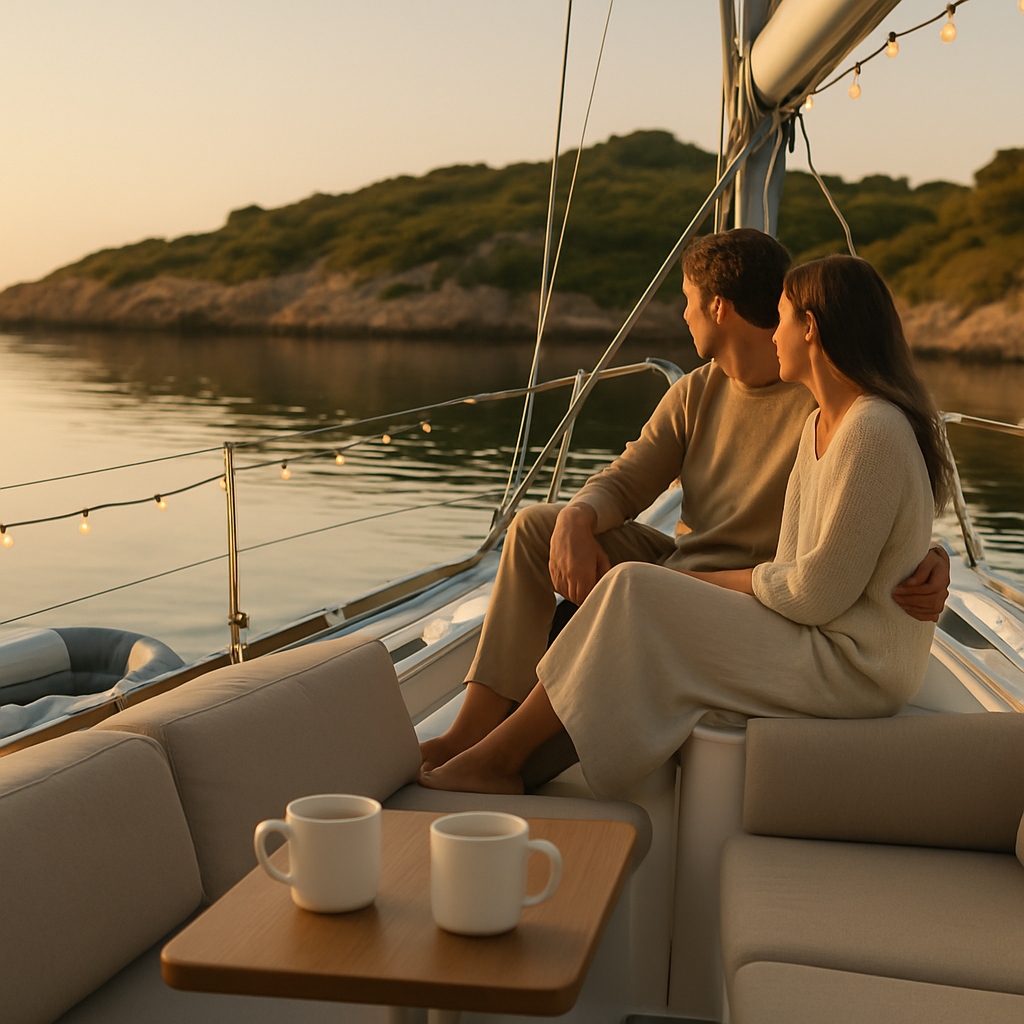
Make the cockpit and cabin inviting. Soft lighting, a warm throw, two good mugs, and a playlist do wonders. If one of you gets cold at night, two throws are better than one. Small comforts matter: noise-cancelling earplugs, eye masks for sun-wake naps, and a tidy, accessible day-bag for each partner.
Connection Through Shared Tasks
Sharing responsibilities builds both competence and intimacy. Switch roles regularly so each person learns steering, anchoring and navigation. Celebrate the wins — successful anchoring, a clean docking, or a delicious dinner cooked in a tiny galley. Little celebrations keep morale high and make the whole trip feel like a team effort.
Planning a Slow-Paced Coastal Itinerary: Tips for Couples
The best itineraries are flexible. They list options, not obligations. Here’s how to build a slow-paced, couple-friendly plan that lets you enjoy the journey without stress.
Start with Comfortable Daily Distances
Aim for 1–4 hours underway. That gives you time in the morning for a lazy start, daylight to find a good anchorage or marina, and an evening ashore. Keep fuel and motoring in mind — calm days require a plan B if winds don’t cooperate.
Include Buffer Days and Alternatives
Weather or mood can change; schedule at least one day without a fixed plan. Book critical nights — like a stay in a busy marina — but leave others open. That way you can linger in a place you love or skip a spot if the weather turns.
Alternate Active and Rest Days
Switch up the tempo: a day of short sails and island exploration followed by a lazy day anchored with snorkeling and reading. It prevents fatigue and keeps the trip dynamic and relaxing at once.
Plan Food for Ease and Delight
Pack meals that are both simple and special. Overnight oats, charcuterie lunches, and one-pot dinners do wonders. Cooking together can be fun — make it part of the experience. If you’d rather not cook, pick anchorages near restaurants for at least one evening.
Destinations That Shine in Calm Coastal Cruising
Some places just make calm cruising sing. Below are tried-and-true favorites where the scenery, access and local culture amplify the relaxed vibe.
San Juan Islands, Washington
Islands, wildlife and small-town charm. Short hops and protected water make this area perfect for couples who love nature and quiet nights under the stars.
Saronic Gulf, Greece
Sheltered anchoring, Greek tavernas and short legs from Athens. If you love good food and calm seas, this one’s a winner.
Chesapeake Bay, USA
Historic ports, lazy creeks and lots of sheltered spots. The Bay fits perfect for learning and lingering, with plenty to explore ashore.
Dalmatian Coast, Croatia
Clear water and island tavernas. In the shoulder seasons, you’ll find calm seas and welcoming locals — and no crowds on the best beaches.
Gulf Islands, British Columbia
Quiet inlets, rugged shoreline and spectacular sunsets. The Pacific Northwest offers dramatic scenery and short, satisfying days at sea.
Quick Safety Checklist
| Item | Why it Matters |
|---|---|
| Handheld VHF (with spare battery) | For marina calls, local traffic and quick emergency contact. |
| Two fitted life jackets | Comfortable and ready; use harnesses at night or in rougher patches. |
| Anchor & Rode | Proper gear and scope make all the difference for a restful night. |
| First Aid & Seasickness meds | Handle minor issues quickly and keep both partners comfortable. |
| Navigation backup (paper charts) | Electronics fail. Paper charts keep you moving with confidence. |
Real-World Tips from Sail With 2
A few honest tricks we’ve learned: narrate your actions when anchoring or docking — “Dropping anchor now, scope coming out” — and it calms both you and your partner. Pack a small day-bag per person so you’re not digging through lockers while someone steers. And don’t underestimate the power of a simple playlist. Music changes the mood faster than anything else.
One time we pulled into a sheltered cove thinking we’d anchor for an hour. Two hours, a nap, and an impromptu paddle later, we stayed the night. No regret. That’s the point: build in slack. Plan well, but leave space for those unplanned, perfect moments.
FAQ: Frequently Asked Questions About Calm Coastal Cruising
Q: How far should we plan to sail each day for a relaxed coastal cruise?
A: Aim for short legs—about 1–4 hours underway. That gives you time to enjoy mornings and evenings ashore without feeling rushed. If you want to explore a town, cut the time on the water back so you arrive early with daylight to wander. For new sailors, even shorter hops are great: confidence builds quickly when you consistently arrive relaxed and happy.
Q: What’s the best season for Calm Coastal Cruising?
A: It depends on the region, but shoulder seasons—spring and fall—are often ideal: lighter crowds, gentler winds, and pleasant temperatures. Summer works well in cooler climates like the Pacific Northwest. For Mediterranean and Caribbean cruising, consider early or late season to avoid peak winds and heavy tourist traffic. Always check local seasonal weather patterns before committing.
Q: Should we sleep aboard in anchorages or use marinas?
A: Mix it up. Anchorages are romantic and peaceful, while marinas give you showers, provisioning and solid sleep for longer trips. For a short weekend, one marina night can be a comfortable anchor point and a chance to stock up. If either of you is new to anchoring, practicing in daylight and using at least one marina on the trip helps build confidence.
Q: How can we split tasks so neither of us gets overwhelmed?
A: Talk about strengths and preferences before you cast off. Keep tasks short and concrete—”you helm, I take the bow”—and switch roles regularly so both of you learn. Use simple signals for help and agree on a quick debrief each evening. Sharing the wins (and the goofs) turns chores into teamwork and keeps tension low.
Q: What do we do about seasickness?
A: Prevention is the best cure. Start with ginger, acupressure bands, or over-the-counter remedies if you know you’re sensitive. Fresh air and watching the horizon help a lot; avoid heavy meals before a choppy passage. Choose sheltered routes with less swell when you first try coastal cruising, and always carry meds just in case.
Q: What are the must-have gear items for calm coastal cruising?
A: Keep it simple but smart: a reliable VHF (with spare battery), chartplotter or tablet with up-to-date charts plus paper backups, two fitted life jackets, a proper anchor setup, good cockpit protection (bimini/sprayhood), a basic tool kit, and comfortable bedding. Add small comforts—good mugs, soft lighting, and a day-bag for each person—and the trip feels infinitely sweeter.
Q: How do we choose destinations suited to calm coastal cruising?
A: Look for sheltered waters, multiple nearby anchorages or marinas, and interesting shore options like towns or beaches. Research local wind and tide patterns and pick shoulder seasons for calmer conditions. Proximity to your home marina matters too—shorter transits let you maximize time relaxing rather than just getting there.
Q: Is my boat suitable for Calm Coastal Cruising?
A: Most small to medium cruising boats are fine for calm coastal cruising, but check a few things: hull condition, reliable engine, anchor size and rode, and basic navigation gear. Consider draft for shallow anchorages and the comfort of your accommodations for overnight stays. If your boat has any nagging mechanical issues, fix them before you go—calm trips are more fun when you’re not troubleshooting.
Q: How do we anchor securely in a new cove?
A: Approach slowly, pick a spot away from obvious kelp or rocky patches, and set a scope of at least 4:1 (more in poor holding). Back down gently under low power to set the anchor, then check your position relative to a fixed point ashore or on AIS. Let the anchor settle, and if in doubt, set a second anchor or use a kellet for added security. Practice in daylight to gain confidence.
Q: What pre-departure safety checks should we do?
A: Run a short checklist each time: engine oil and coolant, fuel level, battery voltage, bilge pumps, navigation lights, VHF operation, and stash your lifejackets within reach. Check the weather and have a backup plan for shelter or an alternate anchorage. A quick walk-through avoids a lot of small problems that can ruin a calm day afloat.
Q: How can couples learn and improve sailing skills together?
A: Take a short coastal cruising course, join local sailing clinics, or do day sails with more experienced friends. Practice makes a huge difference—start with short, familiar trips and deliberately swap roles so each person learns helm, trim and anchoring. Keep lessons light and fun; celebrate progress and don’t be afraid to ask for hands-on guidance from more seasoned sailors.
Q: What are good environmental practices while cruising?
A: Pack out all trash, avoid anchoring on fragile seagrass or coral, use eco-friendly soaps, and minimize single-use plastics. Respect local wildlife—keep distance from sensitive bird colonies and marine mammals. Small actions preserve the places you love to visit and make sure they’re there for future trips.
Final Thoughts: Keep It Simple, Keep It Sweet
Calm Coastal Cruising is a lovely way for couples to reconnect, build nautical skills, and enjoy memorable days at sea. It’s not about perfection; it’s about making the small things delightful: a good cup of coffee at sunrise, a perfect anchoring approach, an easy dinner eaten under string lights. If you keep plans flexible, pack with purpose and communicate with kindness, every trip becomes richer.
So pick a short route, set one simple goal for the day, and go. You’ll learn, laugh, and come back closer than when you left. Want more route ideas or a printable checklist? Sail With 2 has plenty of anecdotes and tips to help you plan. Happy calm cruising — and may your anchor hold steady and your sunsets be spectacular.