Ready to Sail Safer Together? Safety Checklist Essentials to Keep Your Couple Adventures Calm, Confident, and Fun
Attention: you and your favorite person are dreaming about the next escape — salt on your lips, wind in the sails, time slowed down. Interest: imagine arriving at your anchorage relaxed because you knew exactly what to check before leaving the dock. Desire: a short, repeatable set of Safety Checklist Essentials means fewer surprises and more time for sunsets and coffee on the foredeck. Action: read on, bookmark this guide, and practice the routines until they become second nature.
Before you dive into the checklists below, take a breath and remember that preparation is part of the fun—done together it builds confidence and memories that actually outlast the tan lines.
To help you apply these Safety Checklist Essentials in real life, we’ve also compiled targeted resources you might check out: if you want to sharpen the way you coordinate on board, read our Crew Communication Protocols for simple callouts and routines that stop confusion before it starts. If planning and reservations make your head spin, our Efficient Booking Strategies piece walks through how to secure moorings, slips, and provisioning windows without drama. And for quick ideas that fit a two-person crew—checklists, short drills, and gear hacks—our Practical Tips roundup is packed with bite-sized actions you can try this weekend. These linked guides complement the checklist below and make translating plans into practice much easier.
Safety Checklist Essentials for Couple-Friendly Sailing Adventures
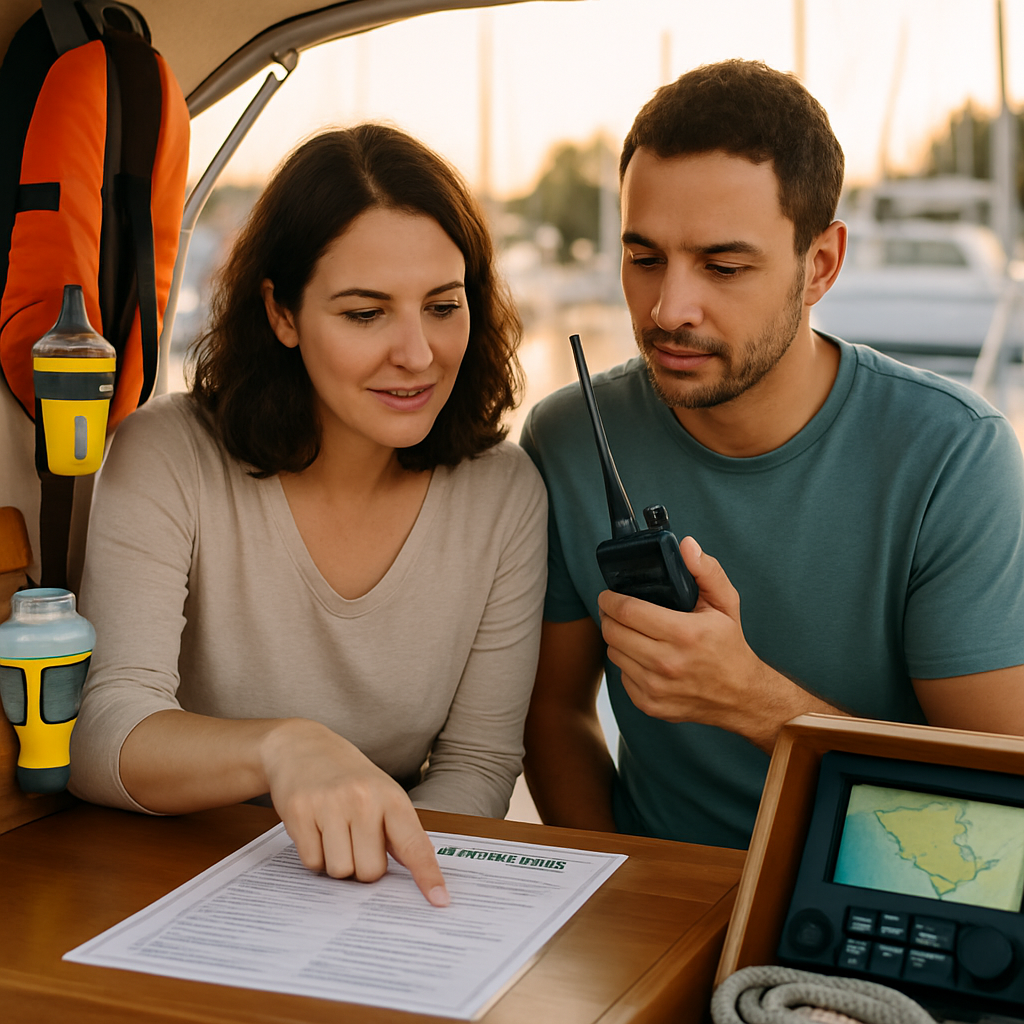
Couples that cruise together do better when they plan together. Safety Checklist Essentials should be simple, shareable, and tailored to two-person crews. Below is a practical, prioritized checklist you can keep laminated near your nav station — the kind of quick reference that prevents forgetfulness when you’re excited or pressed for time.
- Float plan: Route, ETA, boat description, and a reliable onshore contact.
- Lifejackets & harnesses: Fitted, accessible, and with lights/whistles.
- Comms: Fixed VHF with DSC and a handheld backup; program MMSI.
- EPIRB/PLB or satellite messenger: Registered and tested.
- First aid: Fully stocked kit plus seasickness remedies and prescription meds.
- Basic safety gear: Fire extinguisher(s), flares, throwable, bilge pumps.
- MOB plan: Clear roles, practiced recovery, and retrieval aids.
- Weather check: Confirm forecast and set firm go/no-go limits.
- Fuel & energy: Adequate reserves, charged batteries, and alternator functioning.
- Docking & anchoring kit: Lines, fenders, spare anchor bridle/rode.
Why this short checklist works
Long lists are easy to ignore. Short, prioritized Safety Checklist Essentials get used. As a couple, agree on a “top 10” that fits your boat and your comfort limits — this becomes your shared rhythm before every departure.
Pre-Departure Safety Routine: A Sail With 2 Couple’s Guide
Routines reduce mistakes. When both of you follow a consistent pre-departure routine, you’ll find the entire process calmer — less shouted instructions, fewer misplaced items, and more confidence when you untie the lines.
Step-by-step Pre-Departure Routine
- Confirm plans: Recheck route, fuel stops, and alternate harbors. Agree on check-in times with your shore contact.
- Walk the deck: Check hatches, lifelines, cleats, and the general condition of the topsides. Look for chafe or anything that’s come loose overnight.
- Rig and sails: Inspect halyards, sheets, reef points, and spreader tangs. Make sure running rigging runs freely.
- Engine check: Oil level, coolant, belts, filters, and a short run to confirm charging and no strange noises.
- Electrical quick test: Battery voltages, navigation lights, and chartplotter functioning. Ensure spare batteries and power banks are charged.
- Bilge & pumps: Dry bilge, operable pumps, and clear float switches.
- Safety gear audit: Lifejackets visible, harnesses within reach, flares not expired, and throwable devices ready.
- Stow & secure: Lash down heavy items below and secure loose gear in the cockpit so it doesn’t become a missile in a squall.
- Provisions check: Food, water, medicines, and any special items like allergy injectors.
- Final briefing: Go over emergency roles, MOB method, and where essential items are located. Confirm who’s helming on departure.
Assigning roles so you both feel confident
On small crews, clarity beats ambiguity. Typically, one of you can be the skipper in charge of navigation and big decisions, and the other can act as first mate handling sails, lines, and communications. Switch roles during training sails so both partners can step into any job with ease. It’s not about hierarchy — it’s about knowing who says “stop” when the sea gets choppy.
Essential Gear and Training for Safe Coastal Voyages
Gear matters, but skill multiplies the value of every item on board. Prioritize equipment that solves the most likely problems and training that makes you both comfortable using it under stress.
Core Safety Gear for Two
- PFDs and harnesses: Proper fit is non-negotiable. Keep lights and whistles attached.
- VHF radio setup: Fixed VHF with DSC and a handheld for mobility. Program MMSI and practice DSC tests.
- EPIRB/PLB & satellite comms: For coastal and offshore, have one or both. Satellite messengers like inReach offer two-way messaging and tracking.
- Throwable buoy with light & line: Fast to deploy and visible at night.
- Redundant bilge pumping: Electric plus manual pump and spare impeller.
- Tool kit & spares: Impeller, belts, fuel/water separator filters, basic electrical spares, and a multi-tool.
- Fully stocked first aid kit: Seasickness meds, dressings, analgesics, and any partner-specific prescriptions.
Training that pays off
Spend time on the things you’ll likely need in the near term. Aim for short, regular practice rather than long infrequent sessions. A couple-hour session once a month beats a single weekend course every year.
- MOB drills: Practice stopping and retrieving in calm conditions. Try both engine and sail recovery methods so you know what works for your boat.
- VHF practice: Make practice calls, send DSC tests, and rehearse a MAYDAY structure so it’s second nature.
- First aid & CPR: One of you should be certified and both should be familiar with the kit and how to improvise care on a rolling deck.
- Fire drills: Know where extinguishers are. Practice getting them out and the correct positioning to attack an engine or galley fire.
- Basic engine maintenance: Learn to change a fuel filter, inspect and replace an impeller, and jump-start or isolate electrical issues.
Weather Awareness and Emergency Preparedness: A Couple’s Checklist
Weather is the conversation you can’t ignore. Making good calls around forecast uncertainty is one of the best safety investments you’ll ever make as a couple.
Checking the weather: practical tips
Use multiple sources: government marine forecasts, reputable weather apps, local harbor reports, and a quick chat with the harbormaster. Look not just at wind but at gusts, sea state, and trends. If the barometer drops sharply, take it seriously.
- Wind: Sustained wind and expected gusts — those gusts bite.
- Seas & swell: Height, period, and direction. Short, steep waves make life unpleasant quickly.
- Visibility & precipitation: Rain squalls reduce visibility and can surprise you with wind shifts.
- Local effects: Tidal streams, geographic funneling, and localized weather patterns (like sea breezes) that might differ from offshore forecasts.
Emergency preparedness checklist
- Go/no-go criteria: Agree in advance on wind and sea limits. If conditions hit your threshold, don’t argue — delay.
- Communication protocols: Pre-plan who you call and when. Set check-in times with a shore contact and stick to them.
- MOB backup options: If weather turns, consider dragging a drogue or using a sea anchor to control drift while you recover a person.
- Abandon ship plan: Know where your grab bag is (laminated list, water, flares, EPIRB) and mentally rehearse life raft deployment — ideally on land first.
- Grounding and collision: If you ground, reduce speed, check for flooding, keep calm, and call for assistance early if you can’t re-float safely.
On-Board Safety Protocols: Roles, First Aid, and Communications
Onboard protocols should be clear, practiced, and short enough to remember under stress. Use callouts, short phrases, and consistent roles to avoid confusion when things get tense.
Watchkeeping and task rotation
Keep watches predictable. For day sails, rotate every 30–45 minutes if the trip is long. For night passages, shorter watches (30–60 minutes) help stave off fatigue. Always signal an upcoming tack, reef, or manuever so both of you are synchronized.
Man Overboard (MOB) procedure for two
- Shout & point: Immediate vocal alert (“MOB!”) and continuous pointing to mark the casualty.
- Deploy floatation: Throw the lifebuoy or throwable and prepare a life sling, jackline, and recovery ladder.
- Communicate: One person calls MAYDAY or transmits DSC if appropriate; the other executes the maneuver.
- Recover with care: Approach slowly, stop the engine when safe, and be mindful of propellers. Use a lifting sling or strong crew member to haul the person aboard.
- Post-recovery care: Treat for hypothermia, examine injuries, and get dry clothes and warming measures in place.
First aid essentials and small-boat improvisation
Your first aid kit is more useful when both of you know where things are. Practice opening packages, applying dressings, and basic splint creation. Have a waterproof card with critical medical info (allergies, medications, emergency contacts) in the kit.
- Seasickness meds, antihistamines, analgesics
- Sterile dressings, tape, triangular bandages
- Splinting material, instant cold packs, antiseptics
- CPR mask, tweezers, scissors, waterproof medical notes
Communications: redundancy is your friend
Never rely on a single device. Make sure your VHF, handheld, EPIRB/PLB, and cellphone are all checked before leaving. If you have a satellite communicator, set it up to send your position and be ready to text rescue if needed. Practice sending a test message so you know it works.
FAQ — Safety Checklist Essentials
What should be included in a couple-focused “Safety Checklist Essentials”?
You’ll want a compact list that covers the most critical systems and actions: a float plan, lifejackets & harnesses, main and backup communications, EPIRB/PLB or satellite messenger, a well-stocked first aid kit, fire extinguishers, bilge pump redundancy, a throwable flotation device, basic tools and spares, and clear MOB and abandon-ship procedures. Keep it to a one-page top-10 that you both agree on so it’s actually used before every departure.
How often should we practice Man Overboard (MOB) drills?
Practice MOB drills at least once a month if you sail regularly, and always run a quick practice after any long period ashore or when you introduce new equipment or crew. Short, calm-water drills are best — run through the shout/point/throw/rescue sequence, then practice recovery approaches and hoisting. Frequent, short rehearsals build muscle memory and keep both partners confident when it really matters.
EPIRB, PLB, or satellite messenger — which should we carry?
For coastal cruising, a PLB and a satellite messenger (two-way) are often the most practical combo: PLB gives you a reliable distress beacon, while an InReach-style device lets you text responders and loved ones. If you plan offshore passages, an EPIRB is strongly recommended because it’s boat-mounted, robust, and optimized for long-range rescue coordination. Choose based on distance offshore, budget, and whether you need two-way communication.
What basic weather go/no-go criteria should couples agree on?
Set simple thresholds: maximum sustained wind, expected peak gusts, and maximum comfortable wave height for your boat and experience level. Common conservative limits for many couples are 20–25 knots sustained wind (lower if your boat is small), gusts exceeding 30% above forecast, or short, steep seas that exceed 1.5–2 meters depending on your tolerance. Also consider visibility: heavy rain or fog can make a benign day unsafe for a two-person crew.
How do you create a float plan that’s actually useful?
A useful float plan contains boat description (name, type, length, color), skipper and crew names, contact numbers, MMSI and registration, proposed route with waypoints, intended departure and arrival times, fuel and provisioning status, and emergency contacts ashore. Leave it with someone reliable, and agree check-in times. If plans change, update your contact—timely info speeds up rescue if needed.
Which first aid items are highest priority for couples at sea?
Prioritize seasickness remedies, adhesive dressings, sterile pads, tape, triangular bandages, elastic bandages, antiseptic, analgesics, antihistamines, and any prescribed meds (like epinephrine). Also include a CPR mask, scissors, tweezers, and instant cold packs. Keep a waterproof card listing allergies and meds. Practice using the items so you don’t fumble when hands are wet or the boat is rolling.
How should we maintain lifejackets and harnesses so they’re reliable?
Rinse lifejackets with fresh water after exposure to salt, dry them thoroughly before stowing, and inspect straps, buckles, and lights regularly. Replace expired or corroded lights and sprays. Harnesses should be inspected for chafe, stitch integrity, and webbing damage; service or replace hardware as per manufacturer intervals. Store them away from UV and chemicals — a small maintenance routine extends their lifespan and performance.
What’s a simple communications redundancy plan for couples?
Use at least two independent methods: a fixed VHF (with DSC) as your primary, a charged handheld VHF for mobility, and a long-range backup like a satellite messenger or PLB/EPIRB. Keep a waterproof phone for local calls when in range. Program MMSI and emergency contacts into devices and practice sending a test DSC and a satellite check-in so you know everything works before you leave.
How frequently should we service the engine and bilge systems?
Do a quick engine check before every departure (oil, coolant, belts, visual leaks) and more thorough servicing seasonally or per manufacturer hours. Change impellers, filters, and fluids at recommended intervals. Test electrical bilge pumps and floats before each trip and deep-clean the bilge monthly during active seasons. Small, regular checks prevent the majority of at-sea failures.
How do we keep checklists usable and not intimidating?
Keep your Safety Checklist Essentials to one page: the top 10 that matter for your boat and skill level. Laminate it and keep it visible near the nav station. Use short, action-focused language (e.g., “PFDs on, tethers checked”) and pair the list with one simple monthly drill. The easier the checklist is to follow, the more often you’ll use it — and that’s the goal.
Post-Trip Safety Debrief: What We Learned and How to Improve
Debriefing turns experience into learning. It doesn’t need to be long — 10–15 minutes over a cup of tea or while unloading lines is enough to make meaningful improvements.
Simple debrief template for two
- Wins: What went smoothly? Praise the team — positive reinforcement sticks.
- Problems: Note any malfunctions, near-misses, or tense moments.
- Immediate repairs: Replace flares used, dry and check lifejackets, and fix any chafe or loose hardware.
- Training to schedule: Pick one drill to run next outing — MOB or VHF call practice are high-impact choices.
- Record changes: Update your float plan template and go/no-go thresholds as needed.
Maintenance, documentation, and the little wins
After every trip, run a short maintenance sweep. Check oil, fill water tanks if low, and clean gear before stowing. Maintain a voyage log; small notes add up into a clear picture of your boat’s health and your crew’s habits. Over time you’ll spot patterns — maybe a particular line always chafes, or one knot loosens — and you can fix them before they cause trouble.
Putting It All Together: A Couple’s Safety Mindset
Safety Checklist Essentials are not about fear — they’re about freedom. The more you practice these routines and the more they become habit, the more relaxed you’ll be on deck. That calmness is contagious: you’ll both enjoy the sail more and handle the unexpected better.
Habits that help you actually use the checklist
- Laminated checklist: Keep a waterproof card pinned at the nav station. If it’s visible, you’ll use it.
- Short drills: Ten-minute drills are easier to commit to than half-day courses. Do one each month.
- Rotate roles: Practice swapping skipper and first mate so both of you are versatile.
- Conservative decisions: When in doubt, delay. It’s easier to stay safe than to fix a mistake at sea.
- Celebrate learning: Acknowledge when a drill goes well. Positive vibes keep everyone engaged.
Final Thoughts
Safety Checklist Essentials are your couple’s insurance policy for better sailing memories. Build routines that are short, realistic, and practiced. Keep your gear simple and well-maintained. Practice essential drills regularly and debrief honestly after each trip. Over time you’ll develop a rhythm where safety and romance coexist: the ability to laugh at a sudden squall because you both know exactly what to do.
Now it’s your move: pick one item from this guide — maybe a laminated checklist or a short MOB drill — and put it into practice this week. Small steps build competence faster than big promises. Sail safe, enjoy the view, and make every passage a shared memory.