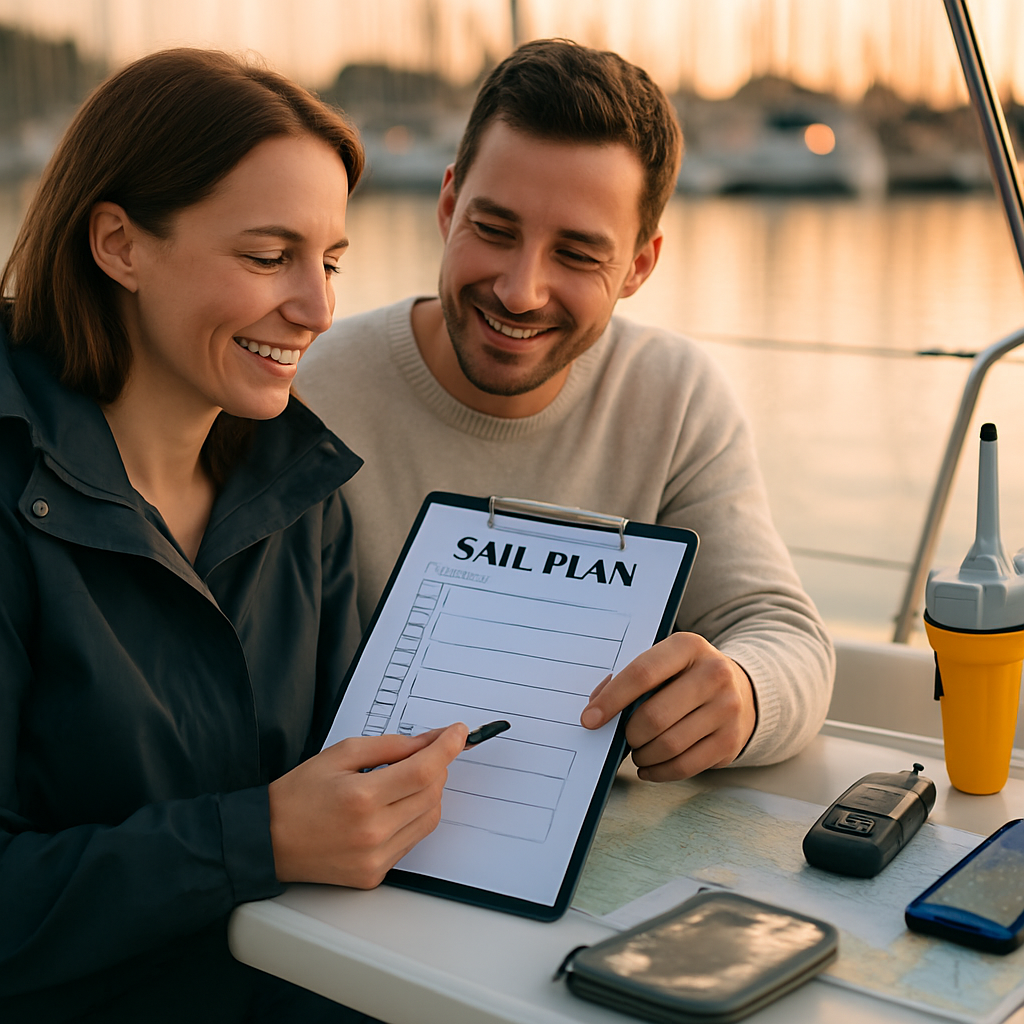
Set Sail with Confidence: Sail Plan Templates That Keep Couples Safe, Calm, and Connected
Attention: You and your partner want a relaxed weekend on the water, not a frantic scramble when the wind shifts. Interest: A simple, well-crafted sail plan does more than tick safety boxes—it frees you to focus on sunsets, conversation, and shared laughter. Desire: Imagine leaving the dock knowing you’ve covered the essentials, left a clear plan ashore, and agreed on who does what. Action: Read on to learn which Sail Plan Templates work best for couples, how to customise them for your boat, and how to fill them out fast—so you can get to the fun part sooner.
As you plan, remember small practicalities that save time and reduce friction: for example, make marina reservations early and manage berth changes with a clear system—our Efficient Booking Strategies guide walks you through timing, cancellations, and partner-friendly booking roles so neither of you ends up on hold. Packing light matters too; the Packing Light Guide shows smart, couple-focused packing lists and storage tricks that keep cabins uncluttered. And for broader reminders—from simple safety checklists to little pre-sail rituals—consult our Practical Tips page to pull everything together before you cast off.
Sail Plan Templates for Couples: A Practical Starter Kit
Sail Plan Templates are structured forms that capture the important details of a voyage—who’s on board, where you’re headed, when you’ll be back, and what to do if something goes wrong. For couples, the ideal template balances safety with simplicity. You don’t need a novel; you need clarity. A one-page starter kit is perfect: lightweight, printable, and easy to hand to a marina office or loved one before you leave.
What to include in a couples’ starter kit
- Vessel ID: name, registration, length, home port
- Skipper and crew: names, mobile numbers, emergency contact ashore
- Departure and arrival: marina, ETA, return-by time
- Route and alternates: main track and at least one safe harbor
- Safety equipment: lifejackets, PLB/EPIRB registration, VHF channel
- Weather snapshot: brief forecast and any critical windows
- Watch plan and roles: who steers, who handles sails, who cooks
- Missed check-in action: what your onshore contact should do and when
Quick tip: Use checkboxes and short phrases. Long paragraphs are hard to parse at sunrise when everyone’s half-awake. Also, make two copies—one on board in a waterproof pouch and one with a trusted person ashore.
Why Every Couple Should Use a Sail Plan Template
You might think, “We’re just popping out for a few hours—do we really need a formal plan?” Short answer: yes. Even brief trips can go sideways. A Sail Plan Template is like a tiny insurance policy: it reduces risk and stress without stealing the romance.
Benefits that actually matter
- Safety made practical: If someone has to search for you, they’ll know where to look and when.
- Shared responsibility: Planning together means both partners know the plan and the triggers for action.
- Less mental clutter: When decisions are agreed in advance you can actually relax on deck.
- Faster, calmer decision-making: Weather turns? Your contingency steps are already written down.
- Good habit-building: Filing a plan becomes as routine as packing snacks—helps you improve each trip.
Personal note (because real people like stories): we once missed a tide window and ended up motoring through a choppy evening. We hadn’t set a clear diversion threshold. Next trip, we used a tiny template with a hard “if wind > X, go to Y” line. Night and day difference. Less arguing, more hot chocolate.
Top Sail Plan Templates for Weekend Getaways
Not all templates are equal. For weekend trips, you want something quick yet comprehensive. Below are templates that are popular with couples and why they work.
1. Quick-Check Weekend Plan
One page, big font, checkboxes for the essentials. Ideal if you sail the same stretch often. Use it when you want speed with no compromise on safety.
2. Marina or Friend Handout Plan
This is the pared-down sheet you leave with the marina office or a friend: vessel ID, crew names, ETA, return-by time, and emergency contact. Short and sweet—easy for someone ashore to act on.
3. Tide-Sensitive Short Cruise Plan
Includes tide windows, draft notes, and harbor entrance details. Perfect for coastal routes where timings matter—think bridges, bars, and sneaky currents.
4. Comfort & Provision Plan
More lifestyle than lifeboat: provisioning list, meal schedule, and simple leisure plans. Helps keep both partners happy—one cooks, the other navigates, and no one gets hangry.
5. Minimal Digital Plan
Stored in a cloud note or shared app, this is quick to update and easy to share via text or email. Not fancy, but effective—especially for tech-friendly couples who want constant updates.
Which to choose? If you’re new to sailing as a couple, start with the Quick-Check. If you’re island-hopping or crossing tidal bars, pick the Tide-Sensitive plan. And always have a Marina Handout—someone needs to know where you are in plain English.
Customising a Sail Plan Template for Your Boat and Route
One template doesn’t fit all boats. Customising your Sail Plan Templates makes them practical. Tweak them to reflect your boat’s capabilities, your local waters, and your relationship style—yes, that matters.
Consider your boat’s limits
Smaller boats behave differently than larger cruisers. Be honest about what your vessel handles well. Add fields like:
- Safe wind limit (e.g., “avoid >25 kt true”)
- Fuel and water endurance in hours/miles
- Known mechanical quirks (e.g., “starter acts up—carry spare solenoid”)
Adapt to your sailing area
Coastal cruising needs tide notes and harbor info. Offshore sailing needs EPIRB registration and HF radio checks. Make sure your template highlights what’s relevant so you don’t drag unnecessary clutter on deck.
Make it couple-friendly
Design with both of you in mind. Keep phrases short, use checkboxes, and include a “roles at a glance” box—who steers, who handles navigation, who cooks. Throw in a line or two for the fun stuff, like “best sunset anchorage” or “wine-opening responsibilities.” A little levity keeps planning from becoming a chore.
Example custom fields to add
- Comfort preferences (temperature, motion-sickness meds)
- Pet on board? (feeding and walking plan)
- Local hazards (rocks, crab pots, frequent fog patches)
From Dreams to Departure: Filling Out a Sail Plan Template
Filling out Sail Plan Templates should be a ritual you both enjoy rather than a box-ticking exercise. Do it together the evening before departure. Make coffee, pull up the weather apps, and talk through “what if” scenarios. It’s efficient and builds confidence.
Step-by-step process
- Confirm your route and at least one safe alternate harbor—write them down.
- Check weather forecasts for departure and arrival windows; note any significant changes expected.
- Record vessel and crew details (don’t forget EPIRB/PLB numbers).
- Agree on an ETA and a hard missed-check-in time when shore contact will raise the alarm.
- Assign roles and watch shifts—keep shifts realistic so no one is exhausted.
- Pack and double-check safety gear, spare parts, and provisioning. Tick them off on the template.
Sample filled weekend sail plan
| Vessel | S/V Second Wind, 28 ft sloop, Reg. 9876-C |
| Skipper/Crew | Maya (skipper) 077-555-123 / Tom (crew) 077-555-456 |
| Emergency Contact | Aunt Jo, 077-555-999 (call if not back by 19:00 Sun) |
| Departure | Harbor Point Marina, Sat 09:00 |
| Destination & ETA | Lighthouse Bay (anchor) ETA 14:30 Sat. Back by 18:00 Sun |
| Route & Alternate | Coastal track via Buoy 4; Alternate harbor: South Haven if swell >1.5m |
| Weather | Forecast: SW 12–18 kt, building to 20 kt Sun AM. Expect choppy seas Sun morning. |
| Safety Gear | 4 PFDs, EPIRB #A12345, handheld VHF, distress flares, first-aid kit |
| Watch Plan | Day: both on deck. Night anchor watch: Maya 22:00–02:00, Tom 02:00–06:00 |
| Missed Check-in | If no return by 19:00 Sun, Aunt Jo calls marina; if no update by 20:00, she alerts coastguard. |
Share a photo or scanned copy of this plan with your emergency contact and save a digital version on your phone. That way, if someone needs to act, they won’t be guessing.
Free vs. Premium Sail Plan Templates: What Works for You?
There are great free Sail Plan Templates and very useful premium services. Choosing between them depends on how often you sail, how far you go, and whether you want automation. Here’s a clear comparison to help you decide.
| Feature | Free Templates | Premium Templates |
|---|---|---|
| Cost | Free to download or print | One-time purchase or subscription |
| Ease of use | Simple, manual entry | Guided forms, auto-populate fields |
| Integration | No integration—print or screenshot | Sync with weather, charts, tide services, and share buttons |
| Updates & Support | Community updates; no formal support | Regular updates & customer help |
| Best for | Occasional sails, weekend trips | Frequent cruisers, offshore trips, tech-oriented couples |
Recommendation: If you’re still building habits, start with a free printable Sail Plan Template. As trips grow longer or more complex, evaluate premium services that auto-populate weather and tide data and let you share plans instantly with your shore contact. That convenience can be worth the subscription—especially when you’d rather spend the evening watching a sunset than wrestling with tide tables.
Tips and Quick Checklists for Couple-Friendly Sail Plans
Here are practical snippets you can copy into your Sail Plan Templates and use right away. They’re short, useful, and made for busy couples.
- Boat name & reg #: __________________
- Skipper & Crew phones: ______________
- Emergency contact: __________________
- Departure: place & time: ______________
- Destination & ETA: ___________________
- Alternate harbor: ____________________
- Weather snapshot: ____________________
- Lifejackets/EPIRB/VHF checked: Y / N
- Fuel & water: OK / Refill
- Missed check-in actions: ______________
Frequently Asked Questions
What exactly are Sail Plan Templates and why should you use them?
Sail Plan Templates are structured forms that record the key details of your trip—vessel ID, crew, route, ETA, safety gear, and contingency actions. You should use them because they make it fast to share essential information with someone ashore, improve decision-making under pressure, and reduce the chance of misunderstandings between partners. For couples, a short, clear template also makes planning part of your shared ritual rather than a burden.
Who should receive a copy of your sail plan?
Leave a copy with a trusted onshore contact—family, a friend, or the marina office. For longer or offshore trips, file your plan with a local coast guard or national reporting service if one exists. Make sure the person you leave it with knows the missed-check-in time and the exact action to take if you don’t return on schedule; that clarity speeds any response and keeps stress low for both of you.
Are sail plans legally required?
Requirements vary by country and by the nature of the voyage. For short coastal outings, sail plans are usually not legally required—but they’re highly recommended. For certain offshore passages or in some regions, reporting intentions to a coast guard or vessel traffic service may be mandatory. Check local regulations before you leave and treat a sail plan as a smart safety habit regardless of the rules.
Can a digital note serve as a valid sail plan?
Yes—provided it’s clear, detailed, and shared with a responsible shore contact. A digital plan is especially useful because you can update it quickly and attach weather screenshots or route screenshots. Just make sure your onshore contact can access it easily and understands the missed-check-in procedure. A printed copy aboard is still a good backup in case phones die or go missing.
What are the absolute essentials every sail plan must include?
At minimum include: vessel name and registration, skipper and crew names with phone numbers, emergency contact ashore, departure point and time, destination and ETA, at least one alternate harbor, basic safety equipment list (PFDs, PLB/EPIRB, VHF), and a clear missed-check-in action. That set of items gives someone ashore what they need to act quickly if needed.
How should you set a missed-check-in procedure?
Agree on a specific time when your onshore contact should start asking questions—e.g., “If we are not back by 19:00, call the marina; if no response by 20:00, notify the coast guard.” Put those exact times and steps on the sail plan. Specificity avoids hesitation and ensures a timely search if required. Also tell your contact where to find photos of the boat and extra identification details.
Which is better for you: free or premium Sail Plan Templates?
For occasional weekend sails, free templates often cover everything you need. If you sail frequently, go offshore, or want automation (weather pulls, tide calculations, cloud sharing), a premium service can save time and reduce errors. Start free to form the habit; upgrade if you consistently find yourself wishing for auto-updating features and easier sharing.
How do you customise templates for your specific boat and route?
Tailor fields to your boat’s limits (safe wind threshold, fuel range), local hazards (tide bars, bridges), and personal needs (motion sickness meds, pet care). Keep the layout scan-friendly: bold headings, checkboxes, and a small “roles at a glance” box. The more your template reflects reality, the more likely you are to use it and to rely on it when things aren’t going to plan.
Will sharing a sail plan affect rescue response or insurance?
Sharing a clear sail plan can speed rescue response because authorities and responders have a starting point. It’s generally seen as a positive safety step by insurers, but policies vary—check your insurer’s recommendations or requirements. Having a documented plan may also help demonstrate that you took reasonable precautions if there’s ever a claims discussion.
How often should you update your sail plan template?
Update it before every trip and revise it after any incident or near-miss so you learn and improve. Small tweaks after each outing—better alternates, clearer watch times, or added gear—turn a basic template into a genuinely useful habit that grows with your experience as a couple.
Final Thoughts — Make It Yours and Make It Routine
Sail Plan Templates aren’t bureaucratic hurdles—they’re a simple kindness to yourselves and to anyone who might need to help. For couples, they reduce friction, create shared responsibility, and let you enjoy the things that drew you to the water in the first place: quiet mornings, brilliant sunsets, and time together without distractions.
Start with a small, neat template. Use it a few times. Tweak it. Add a field or scratch one out. Over time, the process will become part of your pre-departure ritual—and you’ll sail smarter, safer, and with more peace of mind. Now go on—fill out a Sail Plan Template tonight and have an extra hour of real relaxation tomorrow. Fair winds and smooth coffee on the foredeck.